
Your options
Three Ways to Get a Website Built
The short version
Most small business owners end up choosing between three paths. You can build the site yourself with a website builder, hire a freelancer who does the work on their own, or hire an agency with a team of specialists. There's also a middle ground that doesn't fit neatly into either hiring box, which I'll get to below. None of these is the right answer for everyone, and each one asks something different of you: money, time, or trust.

Before comparing them, it helps to know what you're actually choosing. A small business website isn't just a few pages put together. Someone has to plan what each page says, write it, choose photos, set it up so Google can understand it, and keep it running after launch. The real question is how much of that you want to do yourself and how much you want handed to someone else. Keep that in mind as you read each option.
Option one
Building It Yourself
Website builders like Wix and Squarespace are fairly intuitive, and a determined owner can get most of the way to a decent site with them. If you don't have the budget for a designer yet but still want a site, doing it yourself can be a good solution. Imagine a dog groomer who just opened her shop: a simple site with her services, hours, location, and phone number is far better than nothing while the business finds its feet. If you're weighing builders, my look at WordPress or Wix explains the trade-offs in plain English.
What a DIY site costs you is mostly time. You'll write every page, find the photos, figure out the settings that help Google, and keep it updated, all while running your business. The writing is usually the hardest part, and there's a reason writing website content that answers customer questions gets its own guide. If you go this route and get stuck, a website consultant can help with the parts that trip you up. I offer exactly that for owners building their own sites, and I'm glad to help.
Doing it yourself fits best when
The budget isn't there yet
You need a presence now and can upgrade later.
You enjoy it
You like learning tools and don't mind evenings spent on the site.
The site is simple
A few pages covering services, hours, and how to reach you.
Option two
Hiring a Freelancer
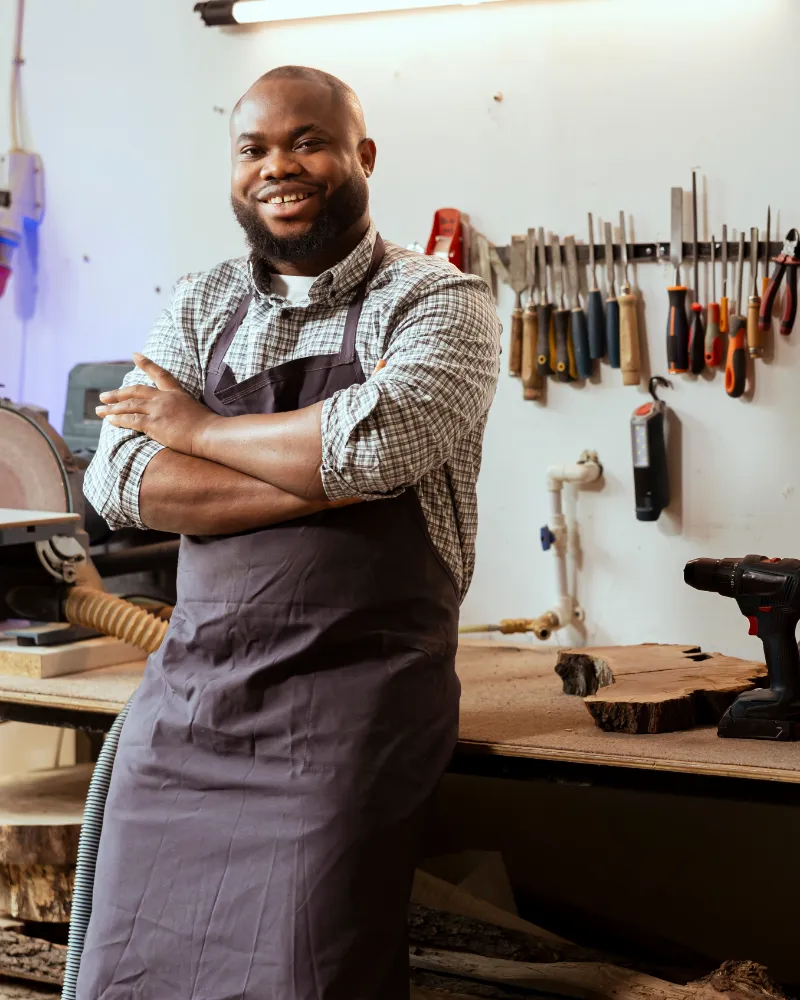
A freelancer is one person who handles your project from start to finish. You usually talk directly to the person doing the work, decisions can move quickly, and many freelancers are excellent at what they do. For example, a plumber who needs a clean five-page site might find a freelance designer who builds it well and answers every email personally. Freelancers vary widely, though, from people just starting out to designers with decades of experience, so it pays to look closely at their past work and how they communicate.
The questions to ask a freelancer are mostly about what happens around the build. Who writes the content, and who finds the photos? Who hosts the site, keeps it updated, and fixes it if something breaks next year? What happens if they're sick, busy with a bigger client, or decide to take a full-time job? None of these are reasons to avoid freelancers. They're simply the details to settle in writing before you start, so you're never left without help.
Not a tech person?
You don't need to be. I'll handle the technical side.
Option three
Hiring a Web Design Agency
An agency brings a team: a project manager, designers, writers, developers, and often marketing specialists. That depth is valuable for big or complicated projects, and good agencies run a well-tested process from kickoff to launch. Take a dental group with several locations, online booking, and a marketing team of its own; an agency is built for that kind of work. You'll usually deal with an account manager rather than the person designing your pages, and the price reflects the team and the overhead behind it.
For a typical local service business, a full agency can be more than the project needs. A plumber, a CPA, or a landscaper usually wants a clear site that explains their services, answers common questions, and makes it easy to call. Paying for a large team to plan a site that size isn't wrong, but it's worth asking whether you'll use what you're paying for. Learning how to choose a web design agency starts with that question: does the agency's usual project look like yours?
In between
The Option in Between
Not every web designer fits the freelancer or agency label, and I'm one of them. Setrik Web Design is a full small business with a very small staff and real resources behind it. That puts me between a solo freelancer and an agency: you talk to the person doing the work, and there's a business, a process, and backup systems behind it. I work best with brochure-style business websites that grow over time with articles and new pages, which covers most service businesses.
What that looks like in practice
Every new website I build includes all the content writing, based on what you tell me, plus stock photos, so you can keep running your business. You get your own admin login, and your domain is registered in your name. After launch, my Hosting & Care plan covers hosting, backups, updates, and security, with a real person to call. You can make your own edits whenever you like, and when you don't have time, I'm happy to make them for you. It's not the right fit for every project, and I'll tell you if it isn't.

Deciding
How to Choose a Web Design Agency, Freelancer, or Neither
Whether you're working out how to choose a web design agency or comparing independent designers, the same handful of questions sorts it out. They work for an agency, a freelancer, or a business like mine, and they matter more than how impressive anyone's own website looks. If you run a CPA firm and you're comparing a local agency with an independent designer, ask each of them the same questions and compare the answers side by side. The differences usually become obvious within a conversation or two.
Questions that settle it
1
How big is my project? A ten-page service site and a site with online booking and inventory need very different teams.
2
How much time do I have? If the answer is "almost none," building it yourself will stall.
3
Who writes the content? Ask whether writing is included or whether you'll be handed a pile of blank pages.
4
Who looks after it after launch? Hosting, updates, backups, and fixes need a named person or plan.
5
Who owns the site and the domain? You should, and you should have your own login.
6
Who will I actually talk to? The person designing your site, or someone passing messages along?
Cost and ownership
Agency vs freelancer: the money and the risk
In the agency vs freelancer comparison, agencies usually cost the most because you're paying for a team and its overhead, while freelancers often cost less but rest on one person's availability. Doing it yourself costs the least in cash and the most in time. Whoever you pick, be wary of anyone who guarantees first-page rankings, which Google itself warns about in its advice on hiring an SEO. For a sense of website design cost with me, my pricing page shows typical ranges.
Ownership deserves its own conversation before you sign anything. Some builders keep the domain, the hosting account, or the login in their own name, which makes it hard to leave later. I cover that in detail in my article on who owns your WordPress website when someone else builds it. In the meantime, my list of questions to ask before you hire a web designer covers ownership, hosting, and life after launch.
The honest answer
So, Who Should Build Your Website?
If money is tight and you have time, build it yourself and get help when you're stuck. If your project is large or complicated, an agency's team is worth what it costs. For most local service businesses, the right answer is someone who'll write the content, build a site that fits your business, and still be there after launch, whether that's a freelancer or a small business like mine. Knowing how to choose a web design agency, or deciding you don't need one, comes down to matching the builder to the job.
If you're still unsure how to choose a web designer for your business, I'm always happy to talk it through, even if the honest answer is that you should build it yourself for now. Tell me about your business and what you want the site to do, and I'll give you a straight opinion. You can start with a free, no-pressure conversation whenever you're ready.
Don't have time to learn all of this?
That's what I'm here for. From the first conversation to launch day, I'll guide you the whole way.
Get a GuideKeep reading
What to Ask Before You Hire a Web Designer
Questions about ownership, hosting, and life after launch.
Read the articleWhy I Build Websites with WordPress
An honest look at WordPress and Wix for small businesses.
Read the article